

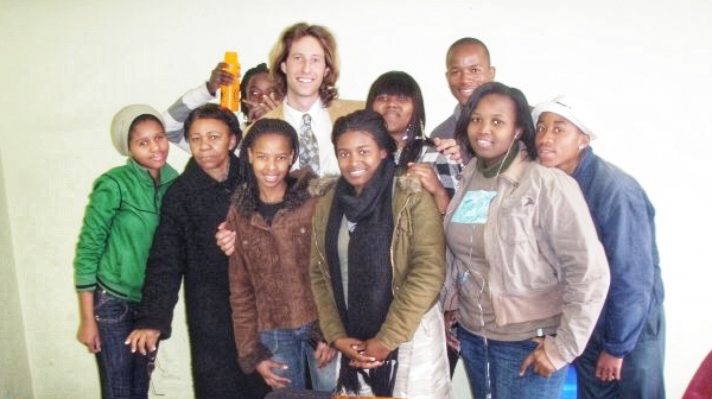
I wake up every day excited to give people – rich or poor – a precious tool to transform their lives in ways they hadn’t even imagined, and to discover a wealth of possibilities within themselves. Read more
Archive for the ‘Maharishi’ Category
Find a local certified TM teacher
Other popular posts
-
 My Only Regret Is That I Didn’t Find This Practice Twenty Years Ago
-
 Why I Learned Transcendental Meditation Three Years Ago And Why I Still Practice It
-
 6 Benefits Of Transcendental Meditation (And How You Can Get Started Today)

Navigating Anxiety in Your Thirties
In her early twenties, Josie Overmyer picked up and moved across the country. That influential move was the first time she remembers the Transcendental Meditation (TM) technique playing a role in mitigating stress in her life, helping to spark her into a particularly creative period of songwriting. Today, her creative endeavors are focused in a new direction: entrepreneurship.
Josie talks to us about the role that anxiety plays in her life while pursuing a new career, and how she maximizes her productivity with the help of TM… Read more
But TM is so simple — can it take a person to higher states of consciousness?
Can something simple and easy to practice produce the most immediate, holistic and profound effects?
Almost everyone who learns how to practice the Transcendental Meditation technique is surprised just how simple it is. And yet, the TM technique is designed for full awakening of human potential. Read more
The Basis Of Peace Is Bliss
Many people I meet seem to have the idea that meditation is about ‘stilling the mind’—removing all thoughts so that the mind can relax and achieve the goal of inner peace. Read more
Find a local certified TM teacher
Transcendental Meditation: Rx for Good Health
Spending on health care in the United States is projected to reach the totally incomprehensible amount of $4.3 trillion by 2017. But what do we Americans get in return for that enormous sum of money? Read more
Maharishi: “Knowledge of the Knower is the Basis of all Knowing”
Throughout his more than fifty years of teaching the Transcendental Meditation technique, Maharishi Mahesh Yogi dedicated much of his time and efforts on promoting the understanding that the development of the consciousness of the student is an essential part of achieving the highest ideals of education. Read more
Human Suffering and Stress: How can Transcendental Meditation Help?
In this excerpt from a lecture at historic Jones Hall in Houston, Texas in 1972, Maharishi describes the underlying cause of suffering, the mechanics of stress release and the evolution of human consciousness to enlightenment. Read more
Sage Advice About How to Enjoy a Happier, Fuller Life
“It is natural that one receives what he is in a position to give. The mother gives to the child and, in return, receives from the child; the father gives to the son all his love, wealth, strength, and mind, and in return receives his confidence, love, and happiness.
Read more
“Maharishi, how does TM influence the practice of one’s religion?”
Maharishi Mahesh Yogi discusses how the practice of the Transcendental Meditation technique enhances the practice of an individual’s religion. It’s a message, Maharishi says, that applies to people of all faiths—Christianity, Islam, Buddhism, Judaism, Hinduism, Jainism—every religion. Read more
“What’s Enlightenment?” — Q&A with Maharishi Mahesh Yogi
Q: What’s the goal of Transcendental Meditation?
Maharishi: “The goal of the Transcendental Meditation technique is the state of enlightenment. This means we experience that inner calmness, that quiet state of least excitation, even when we are dynamically busy.” Read more